Showing posts with label Ethiopia. Show all posts

Tuesday, 7 July 2015

The Africa the media never shows you

The hashtag #TheAfricaTheMediaNeverShowsYou has been making waves on Twitter and Instagram during the last week. Started by some young Africans wishing to breakdown the stereotype - war, famine, poverty - often associated with their continent.  Beautiful pictures of African landscape, buildings and poeple are being shared via social media, and offer a wonderful alternative to the 'Poverty Porn' that we have come to associate with sub-Saharan Africa.

I've been to Africa ten times now and love the place. But if it wasn't for running and altitude training, I might never have made it to this most beautiful of continents. Each time I've visited, I've been bowled over by how green everywhere is, how friendly the people are, and, in some cases, how advanced things are.  Each country I've visited has sprung up new surprises, and I never cease to be amazed by the beauty of the people and their surroundings.  And I've just touched the surface. I can't wait to explore some more in the future.  

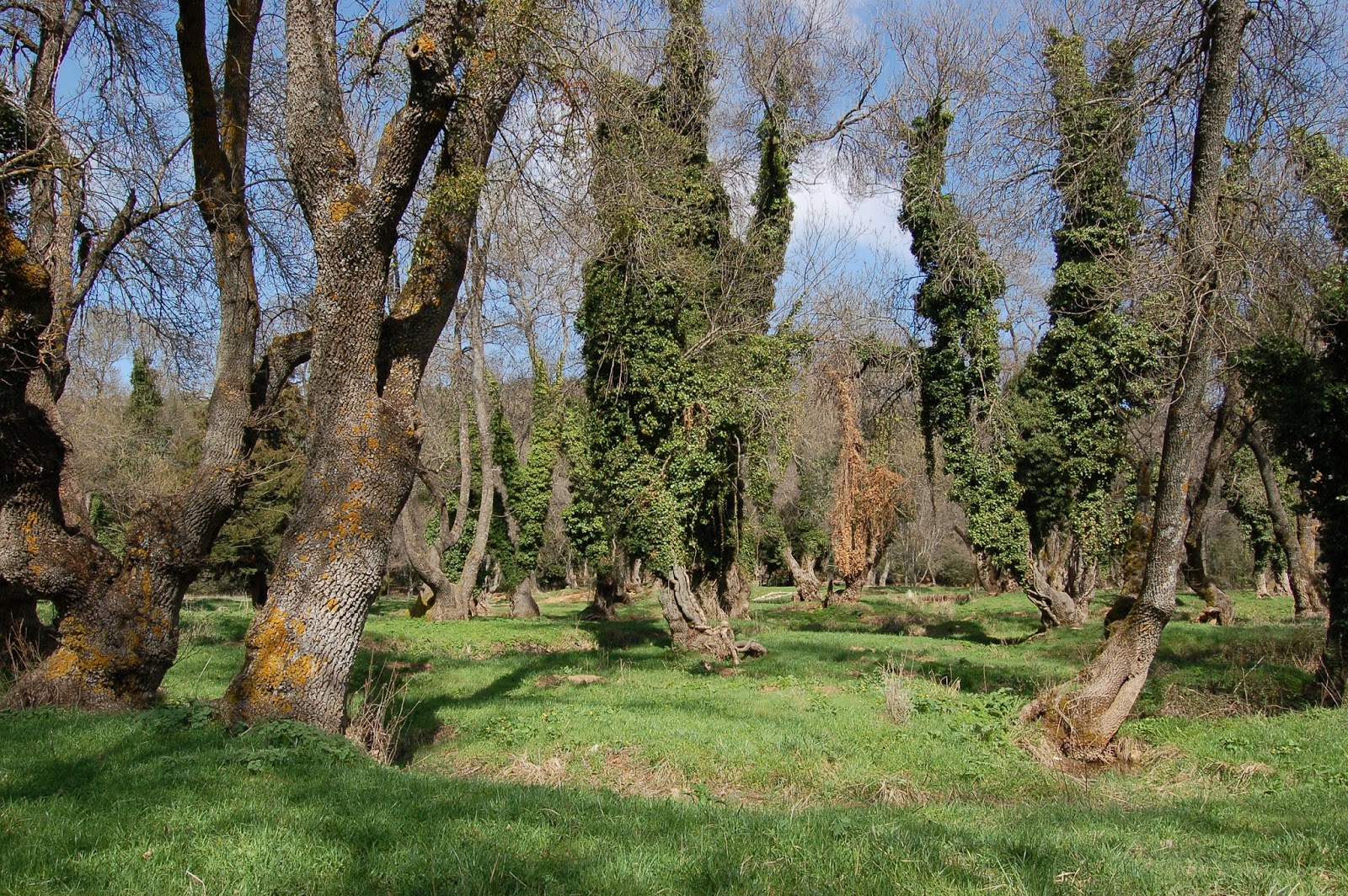
Here are some of my examples of #TheAfricaTheMediaNeverShowsYou from Kenya, Ethiopia, Morocco and South Africa.


And finally, my personal favourite.


Africa doesn't need our pity, but it definitely deserves our curiosity! Don't be afraid to explore it for yourself.

Saturday, 1 November 2014

Altitude Training Options: Ethiopia

Ethiopia is less well known as an altitude training destination than neighbouring Kenya, but the opening of excellent training facilities like Yaya Village and the success of the 2012 film Town of Runners have done much to increase the country’s appeal.  Indeed, Ethiopia’s tourism potential across the board is considerably underdeveloped, and many are surprised to learn of the country’s beauty, cultural diversity, and friendlessness, and that Ethiopia has nine UNESCO world heritage sites!


Sululta, a small town just 11 kilometres north of Addis Ababa, is where many of the athletes who live in the capital carry out their daily training sessions.  It is also home to Yaya Village, a purpose-built training resort which has attracted athletes from across the world since it opened in 2011.  The eucalyptus forests, dirt roads, and grass clearings make for varied running terrain, and the recent opening of a synthetic track, owned by multiple Olympic Champion and world record holder Kenenisa Bekele, is a significant addition for those with a need for speed. 


Those who want to get to the real heart grass roots Ethiopian distance running can visit Bekoji, aka Town of Runners, a small town south west of Addis Ababa.  The town has produced athletes who, between them, have won 10 Olympic gold medals, broken more than a dozen world records, and won more than 30 world championship titles.  Derartu Tulu, Kenenisa and Tariku Bekele, and Ejegayehu, Tirunesh and Genzebe Dibaba.  Visitors to the town have the opportunity to watch the next generation of world-beaters train, and to meet the coach who guided the aforementioned stars in their earlier years.

The Great Ethiopian Run is the largest road race in Africa, and each year it attracts hundreds of overseas participants wishing to test themselves against the altitude, the heat, and more than 10,000 other runners and joggers.


Blogs from my 2010 visit include: Ethiopia by Picture, Farewell Africa...For Now,  This is Ethiopia, Can I be a 'Funrunner' for a Day?, The Carb Queen is Dead and Gone,  and Addis, while during my 2014 visit I blogged about meeting Haile Gebreselaise, wrote about my trip to Bekoji, and summarised my trip in a photo blog. Shane Benzie from Running Reborn wrote a guest piece about training in Bekoji for us in July, 2014.


Additional photos can be viewed here (2014 visit) and here (2010 visit).

More information on altitude training in Ethiopia, and details  of how to arrange a trip there can be found in Notes from Higher Grounds: an Altitude Training Guide for Endurance Athletes.


Thursday, 3 April 2014

Ethiopia by Picture

I've had a fantastic time in Sululta, and to make the end of another great trip, here are a series of photos with commentary and observations.


Yaya Village was a truely special place to stay, and I am grateful to them for providing accommodation for the duration of my trip.


We managed to fill a lot of our time with training, sleeping and eating (consuming seven slices of bread for breafast takes time!), but our occassional journeys outside the camp were always interesting, enjoyable and action packed.  The Ethiopian roads are like a playground in themselves.


The road that climbs from Addis Ababa to Sululta, continues north to the Ethiopia's famous historic sites, including the ancient cities of Gondor, Auxm and Lalibella. The historic route is marked by these carvings, just a few kilometres from the capital.


Interestingly, there's also a 'Coca-cola' carving above these.  They really do get everywhere!

And there are always lots of donkeys.


And the animals are so used to sharing the road that they seem immune to the traffic.  This cow had made a couple of attempts to cross the road before deciding she wanted to live another day. (This is the main road between Addis Ababa, the capital, and the port in Djibouti.)


Animals are commonplace on the quieter roads.


Animals weren't the only obstruction during our trip to Bekoji, and even after leaving the main road, we had lots of people and other vehicles to contend with.  These slow moving Bajajs were particularly plentiful in the towns and villages along the way, and seem to pull out at any moment. 


But as I mentioned in a previous post, it's not all bad, and you do get miles and miles of views like these:


Even in the cities, the views are interesting.  The shops are very different to back home, and you're never sure what unusual scene you're going to find


Even the simple act of taking a taxi can be an adventure.  A few days ago we hired a minibus to take us into the city, wait for us while we did a few errands, and then take us back to the camp.  Little did we think that the 800 birr we were to pay would also buy us a life-time of entertainment.  Over employment is a common feature in Ethiopia, and not only did we have a driver, but we also had three assistants (there was only 4 of us).  It seems that when a vehicle is moving in Ethiopia, everyone comes along for the ride.  Or at least they do when there might be girls to be looked at!

The running options offer lots of variety too.

Sululta is surrounded by dirt roads and Eucyplyts forests which are great for training


The locals simply zigzag over and back in single file through the forest, sometimes at speed, sometimes at snails pace.  We tucked in behind one day, unsure whether the athletes appreciated being followed or not, but it wasn't long till the tail of their train started pointing out the obstructions to us with their useful hand signals.  It's amazing how interesting they can make an easy 30 minute run through a small forest.


But when running over and back through the same forest is just too much, Satellite Field provides plenty of variety.  Besides sharing the field with cattle, donkeys, other runners, and, on Sundays, thousands of aspiring football players (note the simple goal posts), it's a perfect place to train.

After running through the forests and across satellite field on several occasions, I was pleasantly surprised by this view on my long Sunday morning run.


The children love being photographed ...


... and then looking at themselves onscreen.


This group of boys in Bekoji were more than happy to do the Usain Bolt arms for me


When I last visited Ethiopia, I noted that it was developing at a very fast rate, and that development seems to be continuing, at least in the city.  True the fields are still being ploughed with oxen and wooden ploughs, but new highways, apartment blocks and shops are springing up across the city.  Sululta has obviously developed considerably in recent years, and none of the camps or hotels were there when I visited in 2010. The track too is new.

Despite the development, the building methods are still primitive, and I didn't see a single metal piece of scaffolding in the whole city.  I'm not sure this scaffolding would pass Irish health and safety regulations

I leave you with this picture of Addis Ababa, taken from the road to Sululta, and urge any of you wishing to taste Ethiopia for yourself, to take the plunge and go on your own African adventure.

You won't regret it!

Sunday, 30 March 2014

Meeting Haile

They say you should never meet your heroes; they’ll never live up to your expectations!  Well this morning I had little choice.  Just after I sat down for breakfast, Haile started waving and calling me over.  I hope that I didn’t disappoint!

Seriously though, Haile Gebrselassie is one of few people that I’ve ever really wanted to meet, and I was disappointed not to have met him when I visited Ethiopia in 2010.  I did ‘race’ against him in the Great Birmingham run in 2011, but was just behind the elite startline, so that doesn’t really count.  This morning we had a quick chat about training, the weather, and his impending task of pacing the new breed of marathon runners in London in two week’s time.  But the moment was extra special because I didn’t have to go up to him and feel like I was making a nuisance of myself.  He was the one that initiated the interaction.

He said that he can't train as long as he used to - anything more than two hours is too much for his ageing body!  Or maybe having pizza for breakfast is begining to take its toll (well it was my breakfast time, so I can only presume it was his too).

What a hero!

Thursday, 27 March 2014

A scene from Jerusalem and a trip through Nazreth

Pat turned to us and said, ‘It’s just like a scene from The Bible!’

He was so right!  As we looked down from the steps onto the surrounding churchyard, it seemed like we’d been transported 2,000 years back in time.  Give or take a bit of concrete, it was what you’d have expected Jerusalem to have been like around the time of Jesus ... people dressed in long white robes and long white shawls ... chunks of bread and alms being distributed to the poor and the disabled ... the elderly on wooden crutches and walking sticks that could easily have been centuries old .... sheep, goats and donkeys wandering freely outside ...

This is Entoto, one of Ethiopia’s most secret mountains.  The hill which rises to 3,200 m above sea level, overlooks Addis Ababa, the sprawling capital, to the south, and Sululta, and Yaya Village where I’m staying, to the north west.  The eucalyptus forests which stretch across Entoto and the surrounding hills are one of the most popular training grounds of Ethiopia’s illustrious distance runners.

As we make our way down the rocky road from Entoto, we stop to take in the view.  We spot satellite field, the large flat grass area which is also popular among the athletes, and where we have been doing most of our training.  The field is easy to spot thanks to the large adjacent satellite dish that gives the area its name.  Sululta looks so flat from here.  It’s difficult to believe that it sits at 2,800 m above sea level.

I previously visited Ethiopia in November 2010; a visit which incorporated participation in the Great Ethiopian Run and some research for Notes from Higher Grounds.  I felt then that I hadn’t fully explored the running options that Ethiopia has to offer, and when an opportunity arose to stay at Yaya Village in Sululta, just 11 km north of Addis Ababa, I had to take up the offer.  As soon as I had the price of the flight put together, and a three week gap in my schedule, I headed back to Africa.

Yaya Village opened in 2011.  It is a 4-star resort co-owned by Ethiopian-born Canadian international athlete Joseph Kibur, and the man who needs no introduction, Haile Gebrselassie.  The rooms are among the best I’ve stayed in, and the food is very, very good indeed.  Away from the hustle and bustle of the city, the atmosphere is relaxed and peaceful.  The gym is perfect for serious athletes, and there is a soft tartan track, owned by Kenenisa Bekele, just a few minutes away.  The running options in the vicinity are very good, with a mixture of forests and open grassland, and the occasional incline to negotiate.

The accommodation block at Yaya Village

The best bit is that Elaine, an old friend of mine from university, and her boyfriend, Pat, also happen to be, purely by coincidence, staying at Yaya Village at the moment.  Together we’ve been exploring the sites of Addis, availing of the novel entertainment options on offer, and reminiscing about old times.

Our best outing to date was probably the one that cost the least.  For about €3, the three of us managed to punch in a very enjoyable Saturday afternoon in Sululta, not previously known as an entertainment hot spot.  We enjoyed tea, coffee, and popcorn, which forms part of the Ethiopian traditional coffee drinking ceremony, in a local restaurant, before heading across the road to a cafe that was showing the Chelsea v Arsenal game.  There, for less than 10p each, we got to take our place on a wooden stool in a room of spectators fixated on the final 30 minutes of the action.  Football spectating in Ethiopia is very different from the alcohol-fuelled chaos of the UK and Ireland.  All goal attempts were applauded though it was evident that most of the audience were Arsenal supports, the referee wasn’t booed once (though it must be said that we weren’t there for the sending off, and case of mistaken identity), and the fans seemed genuinely interested in the football and were obvious supporters of the game.  Finally, inspired by the action, we purchased a football from a small stand up the road, and tried it out when we got back to the camp.

One of the main items on my agenda during this visit to Ethiopia was to make the trip to Bekoji.  The small town, located some hours south east of Addis, has produced an array of Olympic champions, world record holders and world-class distance runners, including Tirunesh, Ejigayehu and Genzebe Debaba and Kenenisa and Tariky Bekele.  It is essentially Ethiopia’s answer to Iten, and after seeing the Town of Runners, a feature-length documentary on the area, I wanted to see why the place was so special.  On Tuesday, we finally made the trip.

Any journey on African roads is hectic, but this one was particularly noteworthy.  The six-hour trip was alternatively terrifying and spectacular; simultaneously exhausting and exhilarating.  I have long wondered why our local road has no road markings; noting to remind drivers to stay to their own side of the road.  Having seen major roads between Ethiopian cities without these necessary markings, I may scale back my ‘dotted white lines for Irish country roads’ campaign.  A new expressway is due to open along much of this section of road in coming months, which will greatly improve the situation, but in the meantime, drivers must share this dangerous roadway with all manner of animal, continue to pass overloaded HGVs on blind bends, and utilise their obvious nerves of steel.

On Ethiopian roads, the way ahead is not always clear ...
... but when it is, the scenes are both beautiful and interesting.

Though there are obvious disadvantages, riding up front also had is perks, and I feel that I had the best view of the spectacular countryside as we made our way from Addis, through Debre Zeyit and Modjo to Nazreth, and along somewhat quieter roads through Asalla before arriving in Bekoji just before dusk.  There were baboons, goats in the middle of the road, and cows with a complete immunity to traffic and donkeys which appear to work harder than anywhere on earth.  There was a lot of decending and climbing – resulting in just over a 100 m gain in altitude, and scenery which changed multiple times from mountainous to hilly to pancake flat.  The trip may have been long, but it was never boring.

Yesterday morning we got to observe the ‘gymnastics’ session of Bekoji’s main group of athletes, meet with the famous coach Sentayehu Eshelu, and take a short run along the dirt roads, and steep hills of the town.   An impromptu sprint race from the visiting ferengies brought adoring cheers from the spectating locals, but I have a feeling they have little to fear in terms of athletic competition.  After a quick breakfast, there was only one thing left to do – make the trip back to Sululta!


The beautifully coordinated drills for which the Ethiopians are famous

My first 10 days have flown by, but there have been many high points.  A ‘carry-on’ coffee episode made me laugh so hard that I almost cried, Ian’s close call with the Ethiopian police has been the source of endless banter, and I learned that Ethiopians have a novel, but straightforward, way of distinguishing their men from their women.  I have met more world-class athletes than I care to count, got a great new perspective of the country, and had plenty of time to relax and enjoy my time away.  There has, of course, been plenty of training, lots of eating, and a little bit of tanning.  Too soon, it’ll all be over.

Monday, 29 July 2013

Guest Blog 5: Shane Benzie from Bekoji in Ethiopia

The latest guest post is an extract from a blog by Shane Benzie, founder of Running Reborn.  Shane has spent some time running with the Ethiopian athletes in Bekoji, made famous by its many Olympic medalists, and the subject of the 2012 film Town of Runners [DVD] From 2014, Shane will be organising running trips to Bekoji.  To register your interest, or to find out more about the services provided by Running Reborn, check out the website.

I’m running at a pace that I know my body will soon refuse to keep up. Two sounds enter my head momentarily blocking out the voice that is screaming at me to stop and just sit down. The first sound is my breathing, we are at altitude, 9200 ft and just when I need it most the air seems unfairly thin. The second sound is the rhythmic footfall of the eight athletes surrounding me; their steps are quick, light and in perfect harmony. Apart from that they are completely silent, not a sound, I can't hear them breath and some are actually smiling. Then with no words spoken or a warning of any kind they move up a gear and I am left behind to watch a blur of colour glide smoothly away.

I am in Bekoji, known as the town of runners, training with some of Ethiopia's best young prospects and the learning curve is as steep as the hills they train on.

Runners from the tiny Ethiopian town of Bekoji have won 8 Olympic gold medals, broken 10 World records and won 32 World championships

I was extremely privileged to accompany Malcolm Anderson co-founder of Running Across Borders  and Kayla Nolan the Executive Director of Girls Gotta Run to Bekoji.  It gave me an amazing opportunity to see first hand how these two organisations work with and support young athletes.  Not only do they help to produce potential world-class athletes, they also help young people to develop as individuals and find careers in industry related jobs such as coaching and sports massage.

To read more about Shane's experience, and what he learned from training with the Ethiopians, click here.