Showing posts with label Africa. Show all posts

Tuesday, 7 July 2015

The Africa the media never shows you

The hashtag #TheAfricaTheMediaNeverShowsYou has been making waves on Twitter and Instagram during the last week. Started by some young Africans wishing to breakdown the stereotype - war, famine, poverty - often associated with their continent.  Beautiful pictures of African landscape, buildings and poeple are being shared via social media, and offer a wonderful alternative to the 'Poverty Porn' that we have come to associate with sub-Saharan Africa.

I've been to Africa ten times now and love the place. But if it wasn't for running and altitude training, I might never have made it to this most beautiful of continents. Each time I've visited, I've been bowled over by how green everywhere is, how friendly the people are, and, in some cases, how advanced things are.  Each country I've visited has sprung up new surprises, and I never cease to be amazed by the beauty of the people and their surroundings.  And I've just touched the surface. I can't wait to explore some more in the future.  

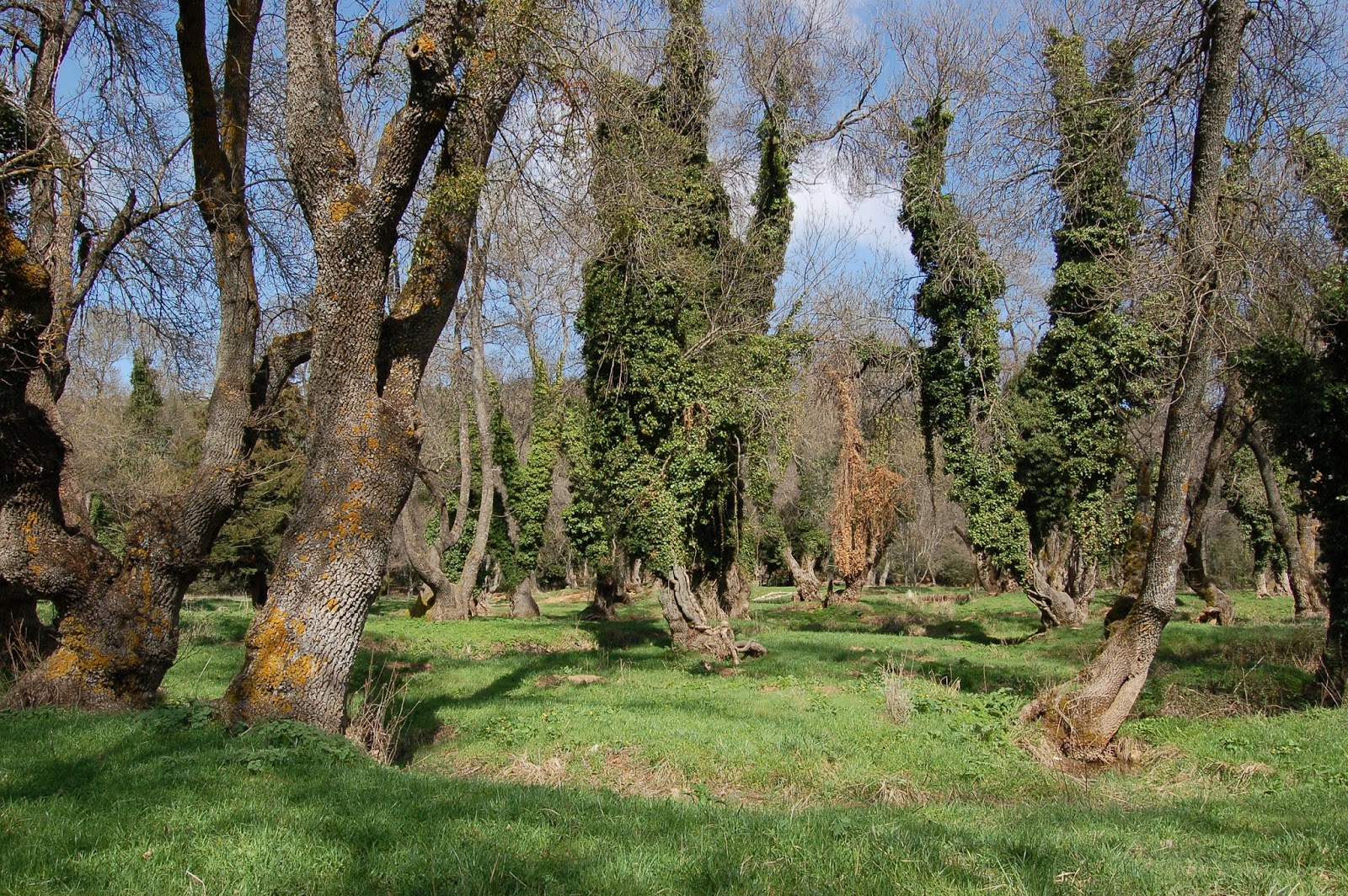
Here are some of my examples of #TheAfricaTheMediaNeverShowsYou from Kenya, Ethiopia, Morocco and South Africa.


And finally, my personal favourite.


Africa doesn't need our pity, but it definitely deserves our curiosity! Don't be afraid to explore it for yourself.

Thursday, 1 January 2015

Altitude Training Options: Kenya

Kenya is our featured country for January.  This is a great time of year to visit the East African country, either to prepare for international success, or to achieve your own small running and fitness goals, and later this month numerous British Olympians and Olympic hopefuls will we heading out on one of their intensive winter training stints in the Rift Valley town of Iten.

As those who have read my book, or followed my blog, will well know, I have been to Kenya six times (and am well overdue a trip).  To say that I love the place would be an understatement.  It is probably the closest I have found to a home from home.  The Rift Valley is, in my view, second only to the Grand Canyon, in terms of awe inspiring natural beauty, and sitting on it's edge is one of the most relaxing activities one can engage in.  The people are the friendliest I've come across, and the laid-back atmosphere has yet to fail in rejuvenating me or recalibrate for me what is important in life. Even if I wasn't a runner, I think I would find Iten and the surrounding Rift Valley region a great place to visit.


But it is the opportunities that it offers runners, that is the real jewel in Kenya's tourism crown.  The altitude, above 2000m, is perfect for altitude training.  The climate too is almost perfect, and apart from a few weeks of heavy rain, training is possible here almost year round.  The locals may complain about the cold in the winter months, but daytime temperatures rarely drop below 20 degrees, and with low humidity (as a result of the altitude), the weather is rarely unpleasant for training.


Most roads are unsealed, undulating dirt roads that meander through the countryside, and even the surfaced main roads have dirt trails alongside them, so there is no shortage of forgiving surfaces on which to complete high volumes of training. Many of the tracks are dirt too, though Lornah Kiplagat has recently opened a Tartan track in Iten for guests of her world famous HATC.

Training facilities are improving all the time, and since it opened in 1999, Lornah Kiplagat's HATC has continued to develop to meet the needs of its foreign guests.  It does, however, maintain a distintively African feel, and guests have the opportunity to sample Kenyan food and way of life in relative comfort.  There is an outdoor swimming pool and a well equipped gym at the camp.


While Lornah's place is well established and well known, on the other side of Eldoret (next to Eldoret Airport) is the Rift Valley Resource Centre, a relative newcomer to Kenya's altitude training offer. This centre, located in Mosoriot, is open to students, athletes and community volunteers.  Lel, Cheryiout and Rotich are among the athletes who have trained on the nearby trails.  The centre has links with a number of local schools, health clinics and community projects, and visitors may have the opportunity to volunteer during their stay.


Further information on training in Kenya can be viewed on some of my previous posts, including the following summary post about Training in Kenya, and these reports from my visit in 2010: This is Kenya and Jambo Sana.

Iten, Kenya is just one of the venues featured in Notes from Higher Grounds: An Altitude Training Guide for Endurance Athletes. Other training sites in Kenya also receive a mention.

Saturday, 11 October 2014

Featured Country of the Month: Morocco

Over the course of September we featured Morocco as an altitude training destination.  The North African country has a rich distance running history, and though the reputation of many of their champions has been marred by less than exemplary doping records, there is no doubt but that the residents of Ifrane, the most popular of it’s altitude training destinations, appreciate and understand athletics.

Ifrane is a small town situated at 1665m of altitude in the Middle Atlas.  It has a track, a good variety of trails, and other facilities for athletes.   It’s functions as a university town, ski resort and as a tourist rest spot, means that there are good restaurants and some comfortable hotels and apartments, and cheap budget flights to Fez, less than an hour away, make it an easily accessible option for European athletes looking to try something a little bit different.


Large areas of the country are mountainous, and adventurous runners will find many more training options, particularly well suited to trail and fell runners, within the Middle and High Atlas Mountains.  Earlier in September Howard Chambers wrote guest post for us on the relative merits of Imlil as an altitude training spot.


Ifrane one of 15 venues featured in my book Notes from Higher Grounds: An Altitude Training Guide for Distance Runners, which can be purchased on Amazon for just £20.  Below is a sneak peak of the Ifrane chapter of the book.


Photos from my visit can be viewed on both Facebook and FlickR

And blog posts detailing my experiences in the town can be viewed here and here.

Monday, 1 September 2014

Guest blog 8: Howard Chambers on Imlil in Morocco

To coincide with our Featured Country of the Month focus on Morocco, the latest guest blog post is a short piece about Imlil in Atlas Mountains, thanks to Howard Chambers of The Right Altitude.  I've not visited, but if the pictures are anything to go by, it looks like a beautiful option, particularly for trail runners.

Set at 1,820 metres, the village of Imlil sits below the towering Mount Toubkal, the highest mountain in Morocco and in fact North Africa. Imlil, and its surrounding valleys, is a world apart from the bustle of the city, and a place of peace and seclusion.

The high Berber villages in this region are connected by centuries-old donkey tracks and are still the only way of accessing many of the most remote mountain villages. These paths and tracks offer an unparalleled running experience for the trail runner wanting to train at altitude.


The area offers all year round opportunities, though snow often lies low into the valleys in mid-winter, but summers are much cooler than temperatures than low lying Marrakech with an alleged 300 days of sunshine.


The area also offers a yearly Etape cycle ride and is regarded as one of the toughest in the calendar, with some 40k of ascent to the ski slopes close by.


Thanks to Howard for the information and beautiful photos.  Imlil is located approximately 60 km south Marrakesch, and can be reached by grand taxi through the foothills of the High Atlas Mountains.  Budget airlines Ryanair and Easyjet operate flights to Marrakesch from the UK.  Luxury accommodation is available in the Kasbah (pictured above).

Thursday, 3 April 2014

Ethiopia by Picture

I've had a fantastic time in Sululta, and to make the end of another great trip, here are a series of photos with commentary and observations.


Yaya Village was a truely special place to stay, and I am grateful to them for providing accommodation for the duration of my trip.


We managed to fill a lot of our time with training, sleeping and eating (consuming seven slices of bread for breafast takes time!), but our occassional journeys outside the camp were always interesting, enjoyable and action packed.  The Ethiopian roads are like a playground in themselves.


The road that climbs from Addis Ababa to Sululta, continues north to the Ethiopia's famous historic sites, including the ancient cities of Gondor, Auxm and Lalibella. The historic route is marked by these carvings, just a few kilometres from the capital.


Interestingly, there's also a 'Coca-cola' carving above these.  They really do get everywhere!

And there are always lots of donkeys.


And the animals are so used to sharing the road that they seem immune to the traffic.  This cow had made a couple of attempts to cross the road before deciding she wanted to live another day. (This is the main road between Addis Ababa, the capital, and the port in Djibouti.)


Animals are commonplace on the quieter roads.


Animals weren't the only obstruction during our trip to Bekoji, and even after leaving the main road, we had lots of people and other vehicles to contend with.  These slow moving Bajajs were particularly plentiful in the towns and villages along the way, and seem to pull out at any moment. 


But as I mentioned in a previous post, it's not all bad, and you do get miles and miles of views like these:


Even in the cities, the views are interesting.  The shops are very different to back home, and you're never sure what unusual scene you're going to find


Even the simple act of taking a taxi can be an adventure.  A few days ago we hired a minibus to take us into the city, wait for us while we did a few errands, and then take us back to the camp.  Little did we think that the 800 birr we were to pay would also buy us a life-time of entertainment.  Over employment is a common feature in Ethiopia, and not only did we have a driver, but we also had three assistants (there was only 4 of us).  It seems that when a vehicle is moving in Ethiopia, everyone comes along for the ride.  Or at least they do when there might be girls to be looked at!

The running options offer lots of variety too.

Sululta is surrounded by dirt roads and Eucyplyts forests which are great for training


The locals simply zigzag over and back in single file through the forest, sometimes at speed, sometimes at snails pace.  We tucked in behind one day, unsure whether the athletes appreciated being followed or not, but it wasn't long till the tail of their train started pointing out the obstructions to us with their useful hand signals.  It's amazing how interesting they can make an easy 30 minute run through a small forest.


But when running over and back through the same forest is just too much, Satellite Field provides plenty of variety.  Besides sharing the field with cattle, donkeys, other runners, and, on Sundays, thousands of aspiring football players (note the simple goal posts), it's a perfect place to train.

After running through the forests and across satellite field on several occasions, I was pleasantly surprised by this view on my long Sunday morning run.


The children love being photographed ...


... and then looking at themselves onscreen.


This group of boys in Bekoji were more than happy to do the Usain Bolt arms for me


When I last visited Ethiopia, I noted that it was developing at a very fast rate, and that development seems to be continuing, at least in the city.  True the fields are still being ploughed with oxen and wooden ploughs, but new highways, apartment blocks and shops are springing up across the city.  Sululta has obviously developed considerably in recent years, and none of the camps or hotels were there when I visited in 2010. The track too is new.

Despite the development, the building methods are still primitive, and I didn't see a single metal piece of scaffolding in the whole city.  I'm not sure this scaffolding would pass Irish health and safety regulations

I leave you with this picture of Addis Ababa, taken from the road to Sululta, and urge any of you wishing to taste Ethiopia for yourself, to take the plunge and go on your own African adventure.

You won't regret it!