Showing posts with label South Africa. Show all posts

Tuesday, 7 July 2015

The Africa the media never shows you

The hashtag #TheAfricaTheMediaNeverShowsYou has been making waves on Twitter and Instagram during the last week. Started by some young Africans wishing to breakdown the stereotype - war, famine, poverty - often associated with their continent.  Beautiful pictures of African landscape, buildings and poeple are being shared via social media, and offer a wonderful alternative to the 'Poverty Porn' that we have come to associate with sub-Saharan Africa.

I've been to Africa ten times now and love the place. But if it wasn't for running and altitude training, I might never have made it to this most beautiful of continents. Each time I've visited, I've been bowled over by how green everywhere is, how friendly the people are, and, in some cases, how advanced things are.  Each country I've visited has sprung up new surprises, and I never cease to be amazed by the beauty of the people and their surroundings.  And I've just touched the surface. I can't wait to explore some more in the future.  

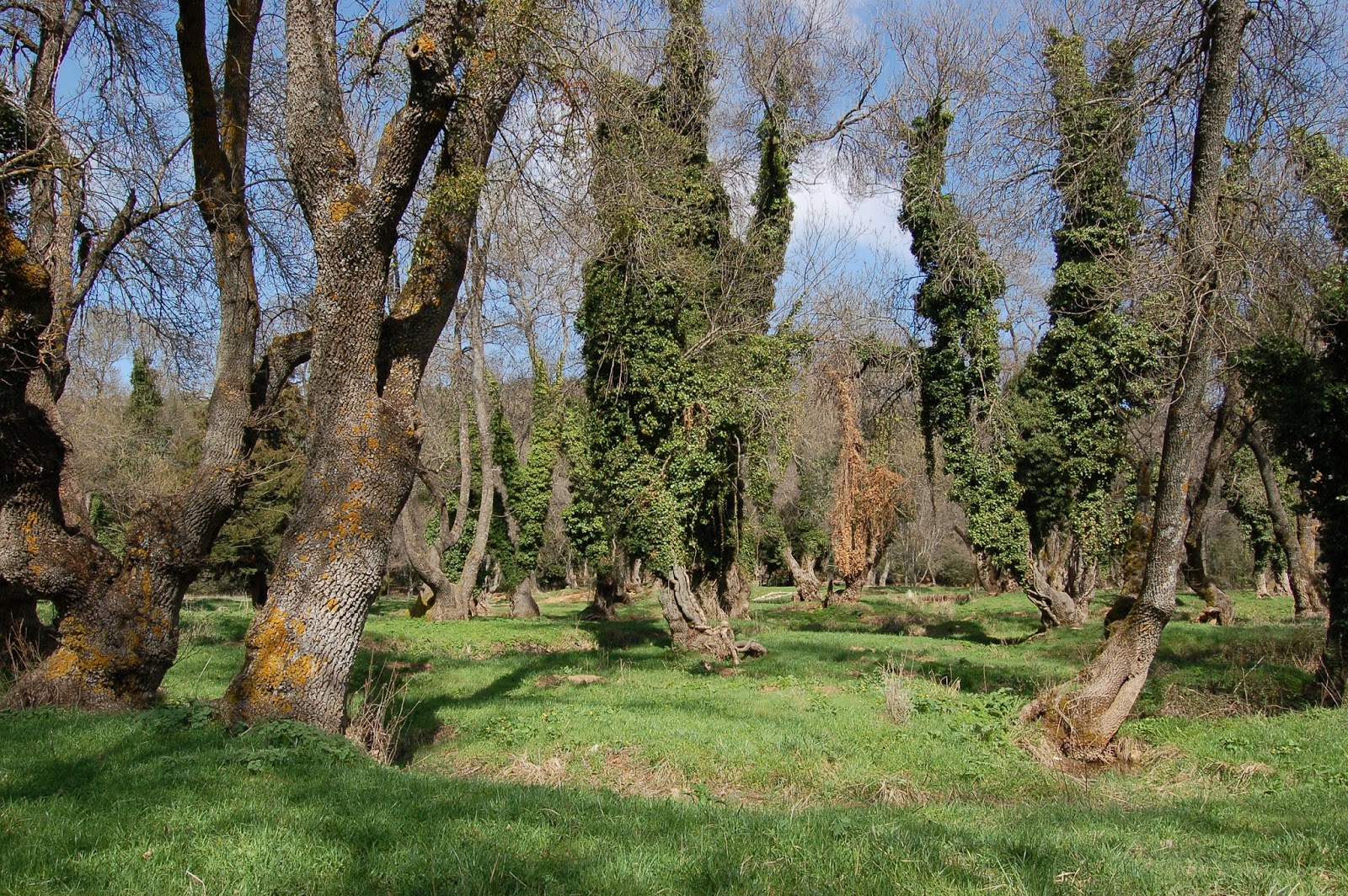
Here are some of my examples of #TheAfricaTheMediaNeverShowsYou from Kenya, Ethiopia, Morocco and South Africa.


And finally, my personal favourite.


Africa doesn't need our pity, but it definitely deserves our curiosity! Don't be afraid to explore it for yourself.

Monday, 1 December 2014

Altitude Training Options: South Africa and Lesotho

South Africa’s diverse natural beauty and pleasant climate (most of the year) make it a popular tourist destination.  It’s colourful political past also make it an interesting place to visit, and once you’ve saved for the airfare, travel is relatively cheap.  Security and personal safety are, however, always a concern, and visitors should take reasonable precautions against crime, particularly in the large cities.  Trips can be very rewarding, and facilities are generally better than elsewhere in Africa.  Best of all, South Africa provides a great opportunity to train in a warm, pleasant climate during the northern hemisphere winter.

Potchefstroom
Potchefstroom is possibly the best known of the altitude training destinations in South Africa, but, while the facilities there are excellent, at 1,350m above sea level it is hardly high enough to initiate an altitude training response.


Dullstroom
The small tourist town of Dullstroom (2,080m), located east of Johannesburg, is a much less well known training spot, but has a greater variety of trails, is safer, has an excellent choice of holiday accommodation, and is considerably higher.  The area is particularly beautiful, but lacks a track and other training facilities.


Photos from my trips to Potchefstroom and Dullstroom can be viewed here. There are blogs from South Africa  hereherehere and here.

Pretoria
Somewhere that has excellent facilities for many sports is the High Performance Centre (www.hpc.co.za) at the University of Pretoria, where there is more than 70 hectares of land dedicated to sports facilities.  The centre’s altitude is approximately 1,350m, with areas up to 1,500m within the city.

Johannesburg
Johannesburg also has some altitude training possibilities, though the city’s reputation for crime is a major turn-off for foreign visitors.

Lesotho
The entire area of Lesotho, a small country which is completely surrounded by South Africa, sits above 1,400 m of altitude.  Covered with rugged mountains and spectacular scenery, Lesotho has a massive tourism potential, and authorities there are beginning to develop altitude training opportunities.  AfriSki resort (3,030m) and Mohale Village (2,200m) are among the currently available options.


Adriaan Geldenhuys wrote a guest blog on altitude training in Lesotho for us in 2013.


Potchefstroom and Dullstroom are detailed in Notes from Higher Grounds: An Altitude Training Guide for Endurance Athletes.  The book also contains further information on training options in Pretoria and Lesotho.

Thursday, 6 June 2013

My top ten favourite books about Africa

As some of you, my readers, may have gathered, I have a little bit of an obsession with Africa.  I’m not sure where, how or why the obsession started – it was probably ignited by TV images of migrating wildebeest, and flocks of brilliantly pink flamingo – but I know that towards the end of my PhD studies, planning my first trip to the content started to fill most of my waking hours (or at least those that weren’t occupied by PhD thoughts).  I also have an obsession with books.  And I’ve read quite a few books about Africa.  Here are my top ten.

1. Africa: Altered States; Ordinary Miracles (Richard Dowden)
This book was so good, that it took me three years to finish it; I really didn’t want it to end.  Each chapter looks at a different African nation, and in a part-autobiographical account, part-historical report, Dowden details that country’s plight against imperialism, poverty and/or civil war.  Over the course of the book he tries to piece together what makes Africa the continent it is today.  What makes the book so good is that it doesn't take sides.  It doesn't place blame; it just details how things are.  The colourful culture of the African people is vividly portrayed, and the series of mishaps and misfortunes they have endured, and overcome, are put into context of how they have shaped the Africa of today.  If you have ever wanted to find out more about the Dark Continent, this is a highly recommended starting point.

2. Playing the Enemy: Nelson Mandela and the Game that Shaped a Nation (John Carlin)
This is the book that I’m most likely to buy to give to somebody.  The book is even more powerful than its excellent onscreen adaptation (Invictus, starring Morgan Freeman and Matt Damon), and had me in tears towards the end.  Brilliantly informative, and perfectly emotionally poised, Playing the Enemy charts how Nelson Mandela utilised rugby, and specifically the 199? Rugby World Cup, to mobilise political sympathy and non-violent recognition of the plight of black South Africans.  In utilising sport as a means of giving White South Africa what they wanted, Mandela brilliantly wins over his biggest political rivals, and cleverly conjures up a unified national pride which overwrites centuries of racial hatred. Carlin eloquently captures the spirit of Mandela's greatest moments which cumulate in a South African World Cup victory that all South Africans, black, white, Indian or Coloured can jubilantly celebrate.  Even if you have no interest in rugby, African politics or Nelson Mandela, I'd find it difficult to believe that anybody would not be moved by this wonderfully told tale. 

3. Dark Star Safari: Overland from Cairo to Cape Town (Paul Theroux)
This is the first of Paul Theroux’s excellent travel books that I read, and his excellent observational writing has catapulted him to the top of my favourite travel writers list.  I found myself nodding in agreement, smiling or laughing out loud throughout, and, like Africa: Altered States; Ordinary Miracles, I remember a distinct disappointment when I’d finished it.  That was an easy ill to cure though; I just went out and bought the rest of his books.

4. Swahili for the broken-hearted (Peter Moore)
This was the first book I ever read about Africa, and the humorous account of a journey from Cape Town to Cairo shaped much of my preconceptions of Africa.  When I lent the book to someone years ago, and didn’t get it back, it felt like a small part of me went missing.  Thankfully, I located another copy in a second-hand bookstore, and it’s been added to my to-read pile, as I’m really interested to see how differently I view it, several visits to Africa later.

5. Long Way Down (Ewan McGregor and Charley Boorman)
Another rather light-hearted account of a journey through Africa, as Ewean McGreggor and Charlie Boreman share accounts of their trip on motorbikes.

6. Blood Diamonds: Tracing the Deadly Path of the World’s Most Precious Stones (Greg Campbell)
This book investigates the illegal West African diamond trade, and, in essence, is the true story behind the film Blood Diamond.  I’ve never seen what the big attraction of diamonds were, and the book highlights the fact that they really shouldn’t cost as much as they do, either in terms of money, or of human life. 

7. The Greatest: The Haile Gebrselassie Story
In the past I’ve always chosen autobiographies over biographies.  However, after reading some pretty mundane sports autobiographies, The Greatest went a long way to changing my preference.  This book is a well-written story of arguably the greatest distance runner the world has ever seen, but has considerable insight from Gebrselassie himself.  The book helped me relive some of Gebs great victories, and learn a lot about the man behind the athlete.

8. More Fire: How to Run the Kenyan Way (Toby Tanser)
More a reference guide than a cover to cover read, More Fire is an updated version of the now out-of-print Train Hard, Win Easy the Kenyan Way.  The book, written by Toby Tanser, who I had the pleasure of meeting on a couple of my Kenyan visits, is packed fully of facts, observations and points of interest about the World's greatest running nation, and, if you haven't already been won over by my blogs about Kenya, More Fire is sure to inspire you to take a trip to Iten or other Rift Valley training venue. 

9. Long Walk to Freedom (Nelson Mandela)
This book is unique, in that it makes it onto the list though I’ve not yet finished reading it (it is a very long book).   The 370-plus pages that I have read though have given an incredible insight into the life of one of the greatest political figures of all time.  Mandela doesn’t make out to be a saint, and tells things as they were, from his support of fighting the struggle by peaceful means for purely political means, to the shift to violent methods of freedom fighting.  There are bits that Mandela could have omitted to make himself look better, but the inclusion of his mistakes as well as his greatest moments is commendable.  Mandela, wasn’t born a Nobel Peace Prize winner; he is human like the rest of us, and his story takes the reader on the journey he travelled to become the person we know and love.  The prison years, and the eventual liberation have yet to come, but if the second half of the book is even half as good as the first, Long Walk to Freedom is more than deserving of its place in my top ten. 

10. The Running Man (Gilbert Tuhabonye)
This is the best of the rest when it comes to African running-related books.  Though not a literary masterpiece by any stretch of the imagination, the true-story of Gilbert Tahabonye’s escape from genocide-torn Burundi, and his use of running to rebuild his life, is both heart-wrenching and heart-warming.


Other books that I’ve read and enjoyed: A Long Way Gone (Ishmeal Beah), the horrific tale of a boy soldier in Sierra Leone; No Future without Forgiveness (Desmond Tutu), the memoirs of one Desmond Tutu, the former Archbishop of South Africa; The White Massi (Corinne Hofmann), the true story of a tourist who fell in love with a Massi warrior during a holiday to Kenya; and Running with the Kenyans (Adharanand Finn), a great story of running in Kenyan, which I would recommend to anyone who hasn’t yet visited the country.

Update Feb 2016: I've just finished reading King Leopold's Ghost: A Story of Greed, Terror and Heroism in Colonial Africa (Adam Hochschild), and enjoyed it so much that I had to add it here. It was an incredibly enthralling read, telling an important tale, but with lots of interesting anecdotes throughout. It made history interesting, and has again inspired me to expand my collection of Africa-related books.


Wednesday, 11 January 2012

Another Journey Home

Alas, another journey has ended, and again I find myself in transit. The past week in Dullstroom has been very enjoyable, mostly training, and relaxing. Rather than bore you with the details, here are some of my favourite photos of the area and the trails, and some photos from my visit to the Birds of Prey Rehabilitation Centre just down the road.


South Africa has been very different than I expected; yet again Africa throws up some surprises! The two training sites that I visited were each very different, and my brief stops in Johannesburg and Pretoria, highlighted to me just how diverse this South Africa is – and that’s without visiting the coast. I’ll definitely come back at some stage, but for me the country lacks some of the ‘soul’ of east Africa. Of course that means much less of the hustle and bustle of east Africa, which isn’t always a bad thing.

Next stop: Berlin half marathon on April 1st, followed by Morocco the following week for my penultimate altitude venue. Almost there now!

Tuesday, 3 January 2012

Christmas in Potchefstroom

And so I’ve spent my third Christmas in five years in Africa.  This has probably been the quietest yet, but no less enjoyable.  After the ice and snow of ’09 and ’10, it was nice to have a warm Christmas again.  Christmas morning I went for a run in the scorching heat around the North West University campus where there is a specially set out cross country course, a 400m grass track, and lots of well kept pitches to run on.  After an enjoyable run, I went back to ‘Cosy Cottages’, the very pleasant place at which I was staying.  After some lunch, I relaxed by the pool, took a walk around the town, did some bird watching, did another run, eat and slept.  I know it sounds a bit dull for Christmas, but for me, apart from my family not being here of course, I couldn’t think of a better way to spend it.  And if you’re getting a bit jealous of the heat and sunshine, it did absolutely bucket it down all day Tuesday. It’s not all sunshine, so to speak.


New Year’s Eve was even more low-key.  I did my long run in the morning, got a little bit dehydrated, and was pretty much whacked out for the rest of the day.  I went to bed about 10pm, and as is starting to be tradition for me, I managed to just about stay conscious until midnight, acknowledged that another year had arrived, rolled over, and slept soundly for the rest of the night.


I spoke to Dad before I left Heathrow at the beginning of this trip, and we chatted about how another year had nearly finished, and how we were going to make 2012 the year of living in the present.  The past is finished, and not worth living again, and the future is not yet ready for us, so best to live in the here-and-now.


And so, to the here and now.  I arrived in Dullstroom via Johannesburg yesterday.  Again there were thunder showers yesterday evening so I didn’t get to explore very much. I was pleasantly surprised to see how beautiful the place was when I went for a run this morning.  Dullstroom is a lot more rural than Potch, and the countryside around the small town is as beautiful as I’ve seen anywhere on my trips so far.  The town itself has an interesting selection of shops including an antique shop, no less than two chocolatiers, a clock shop which boasts the largest selection of shops in the southern hemisphere, a small brewery, a shop selling locally produced cheese, and a whiskey bar which reportedly has the second largest selection of whiskeys in the world.  Add to that a small supermarket and a few restaurants, and what more could you ask for?

Despite the modern shops and the reputation of Dullstroom for flyfishing, mountain biking and other Western pursuits, there is a small township close by, and the town feels far more like the Africa that I know and love than Potch, or even Johannesburg.


And now?  Well I guess it’s time to go and do some living in the here-and-now.  I might even go check out some of those clocks.

Have a very special 2012, and I hope that this year is the year that most of your dreams come true.  Not all of them mind, because as someone once said, ‘if today were perfect, what would be the point of tomorrow?’

Saturday, 24 December 2011

It doesn't rain but it pours

In yesterday’s blog I opened by saying how distinctive Africa is, and how you are on the continent as soon as you land at the airport. Well scratch that. Flying into Johannesburg is just like flying into any other airport around the world. It doesn’t smell of Africa, it isn’t dusty, there are no crowds of people, and we didn’t even have to queue at emigration. Did I board the correct plane? Being white doesn’t make me stand out as a tourist, though I’m yet to decide if that’s a good thing or a bad thing. One thing that’s the same though is that nobody knows when the buses leave, or in fact any are travelling today.

It turns out that the last bus from the airport to Potchefstroom (Potch) left at 1pm, and I need to take a taxi to the main station in Johannesburg and hopefully catch a bus from there. It turns out that I get the last available seat for 3 days! I joke that it’s the luck of the Irish – something that maybe I should learn to be less reliant on.

The trip to the bus station was something of a disappointment. Again, there is nothing of the sort of chaos that I would have associated with a major African city, especially not one as notorious as this. In fact, it seems quite a safe and inviting city. But perhaps there in lies the danger.

I can’t tell you much of my trip to Potch; I slept the whole way. And I arrived in a massive thunder storm. As with the rest of Africa; when it rains here, it sure knows how to rain. Familiarity at last!

Friday, 23 December 2011

Back in Africa

Just before 7am this morning (local time), I landed in Ethiopia. It’s strange how distinctive landing in Africa is. Airports the world over tend to have a similar feel and look to them, but somehow airports in this part of the world are different. Maybe it’s the mayhem, maybe it’s the people, but whatever it is you know that you have arrived on the Dark Continent.

It’s been just over a year since I was last in Addis, and I’d forgotten how beautiful it is. The sun rises early in Africa and even at that time in the morning the sun has already risen over the horizon, lighting the beautiful plateau to the south of the city, the hills on which the city is build, and the Mountain peaks which surround it. Although I’m curious to see if it has changed at all, and to see how much of what was countryside last time I was here has been developed. No time for that though, as I am on my way to Johannesburg.

I’ve just boarded the plane, and it would appear that after all these years of flying, I have finally got my first upgrade. Not that business class is any different to economy on Ethiopian Airlines, apart from the fact that both classes are separated by a set of toilets. It’s essentially the same as getting an upgrade on an AirLingus flight. You get to sit closer to the front of the plan, and can see into first class, and ‘what you could have won’. I won’t complain though, and either way there is more room than there was on the sardine tin in which we travelled from London.

The trip so far has been reasonably uneventful, though as usual I left most things until the last minute. I was almost at the station in Stratford when I realised I had left my passport in the office, and when I did get to Heathrow and make my way through security, it took me a while to work out that I was in fact sitting at the wrong gate. Apart from that, there’s been no major problems.

Actually, the longer I sit on this plane, the more I realise that this isn’t even business class – it’s economy class seats in the area of the plane where the business class seats would normally be. Maybe the flight upgrade gods will finally recognise my face and give me a seat with a bit more leg room for the flight from Ethiopia back to Heathrow.

But that’s a few weeks away still, and now I must put away the laptop so that we can fly to Johannesburg. South Africa here I come.